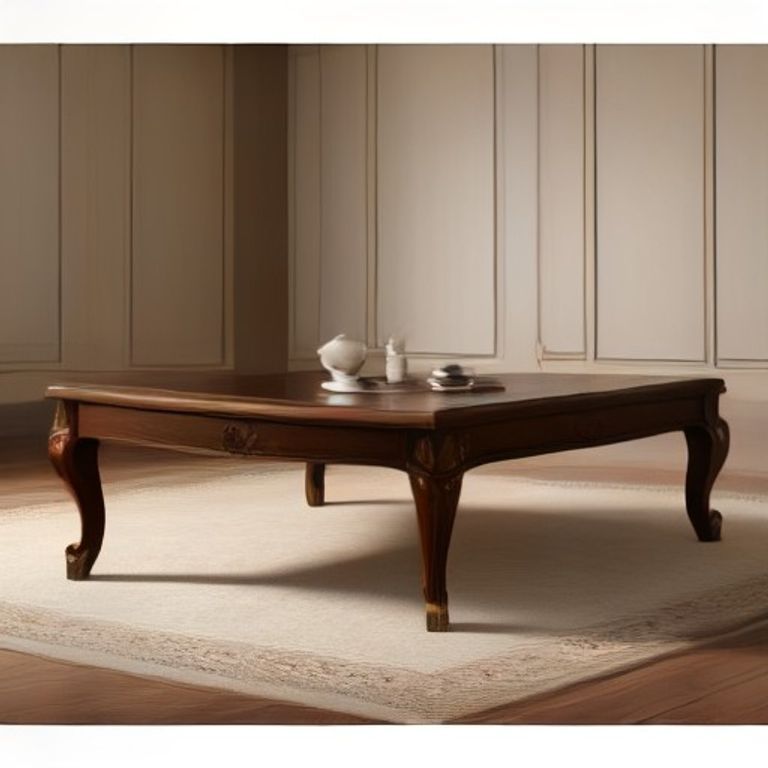
Original furniture developed for manufacturers and retailers, explored with AI and screened against physics before publication.
87 designs · 48 Photo-Traced FEA · 16 FEA Analysed · 23 Concept
Every piece is labelled with exactly what evidence stands behind it. Photo-Traced FEA means the finite-element solve ran on geometry traced from that design's own photograph. FEA Analysed means a solve is on file for it. Concept means the design is released for development with no structural record yet. This is a fraction of the full catalogue, chosen for what best represents the collection.
Loading...
Not sketches.
Designs with their working shown.
AI widens the range of forms we can explore. Exploration is only the beginning — every design still has to earn its place in the collection.
AI-assisted iteration expands the range of forms and directions worth investigating, faster than sketching each one by hand.
Strong concepts are selected and developed further — the rest are discarded, not shown.
Every released design is assigned an evidence class. Screened designs undergo Euler buckling and centre-of-gravity tip-stability analysis. Forty-eight go further: a full finite-element solve run on geometry traced from the design's own photograph.
Screened designs become available for licensing conversations with manufacturers and retailers, with the underlying record handed over for whatever evidence exists.
Designs where the finite-element solve ran on geometry traced from that design’s own photograph — the strongest evidence in our library.
Euler buckling and centre-of-gravity tip-stability form the screening layer, with a full finite-element solve (Gmsh + CalculiX) on the designs that carry an FEA record. Preliminary automated calculation — a screening step, not a certification.
A technical package prepared for a licensing and production-development conversation. Evidence and its limits are identified by design.
We show the solve,
not the badge.
Every Photo-Traced FEA record carries its mesh node count, solve time and peak von Mises stress. Its limits are disclosed right alongside it.
We design; you produce. Every license includes the technical package available for that design — engineering records, drawings and bill of materials, clearly marked by evidence class — ready for your production-development process.
You never pay for what you haven't reviewed. Deposits are tied to staged deliverables — you see the agreed technical package for that design, evidence class and all, before the second payment, not after.
Escrow is available for larger deals. For catalogue-tier licensing, we can route payment through Escrow.com rather than a direct transfer, so funds only release once both sides confirm delivery.
The NDA comes before any payment discussion. You get to evaluate exact specifications and structural data with nothing at financial risk first.
These are the furniture standards our design work is oriented around — the loading behaviour and geometry they describe informs how a piece is proportioned. To be explicit: nothing here is certified, tested or approved against them, and we have no affiliation with the bodies that publish them. Certification testing is a physical process that happens at your factory, on your prototype, during development. What we hand over is the analysis that gets you to that point faster.
Because we will show you the solve, not a badge. The screening is Euler buckling and centre-of-gravity tip-stability. Pieces marked Photo-Traced FEA have additionally been meshed with Gmsh and solved with CalculiX — open-source tools an engineer on your side can verify independently, not a proprietary black box. Each of those records carries its real mesh node count, solve time and peak von Mises stress, and you get the underlying record after NDA. We will also tell you its limits: these are preliminary automated calculations, and the records do not preserve the applied loads or material properties, so an engineer cannot re-derive our stress figure from the record alone. It is a screening step. Nothing in the library has been physically load-tested.
No — and we would rather say so plainly. It means the geometry has been through a preliminary automated structural calculation. The result is a screening record, not a production approval. It does not cover tooling, tolerances, sourcing, packaging, certification, or physical prototype testing. Our own pipeline attaches this line to its reports: "Preliminary automated structural calculation. Recommend independent engineering review and physical prototype testing before production." We stand by that. Production engineering happens with you, during licensing.
Say so in your inquiry. Where the underlying geometry supports dimensional adjustment, we can discuss re-screening a revised configuration before you commit to a license.
Licensing gives your team a developed, structurally screened design without carrying the full cost and time of originating one internally — a single design here is $1,000, with its analysis already done and handed to you.
Exclusive Regional means we don't license that specific design to another manufacturer or retailer within your stated territory — you're the only one producing it there. It doesn't restrict us from licensing the same design outside that territory, and it doesn't cover other designs in the collection unless separately agreed. The 20-Design Collection and Partnership tiers remain non-exclusive by default; exclusivity terms for those can be discussed directly.
You'll get an email with additional information and a link to sign the NDA. Once acknowledged, you get a 48-hour window to review exact dimensions and high-resolution imagery before any payment is discussed.
Structurally screened.
Available for licensing.
Build a shortlist, tell us what you're manufacturing and which market you're targeting, and we'll take the conversation from there.